

Mobile Phone While Driving — The Law and Your Defence
The law on mobile phone use while driving changed significantly in March 2022. The offence now covers any interactive communication function of a device — including video streaming, taking photographs, and scrolling through apps — even without a call being made. These reforms closed the so-called texting loophole and substantially extended the scope of the offence. Charles Ferguson provides specialist defence for mobile phone while driving charges across Glasgow, Lanarkshire, and all of Scotland’s courts.
Penalties for Mobile Phone Offences — Conviction carries 6 penalty points and a £200 fixed penalty. For new drivers within 2 years of passing their test, 6 points results in automatic revocation of the licence under the New Drivers Act. For established drivers, accumulating 12 or more points following a mobile phone conviction may trigger a totting-up disqualification. Employers in safety-critical industries increasingly conduct licence checks, and a mobile phone endorsement can carry significant professional consequences beyond the court penalty.
What Using a Device Actually Means — The legislation defines using a handheld device as any interaction with its interactive communication functions. There are important exemptions: hands-free use with a properly mounted device remains lawful, as does use in a genuine urgent where stopping is not practicable. The question of whether a device was handheld at the relevant moment, and precisely what the driver was doing with it, is often central to the defence and must be carefully examined in every case.
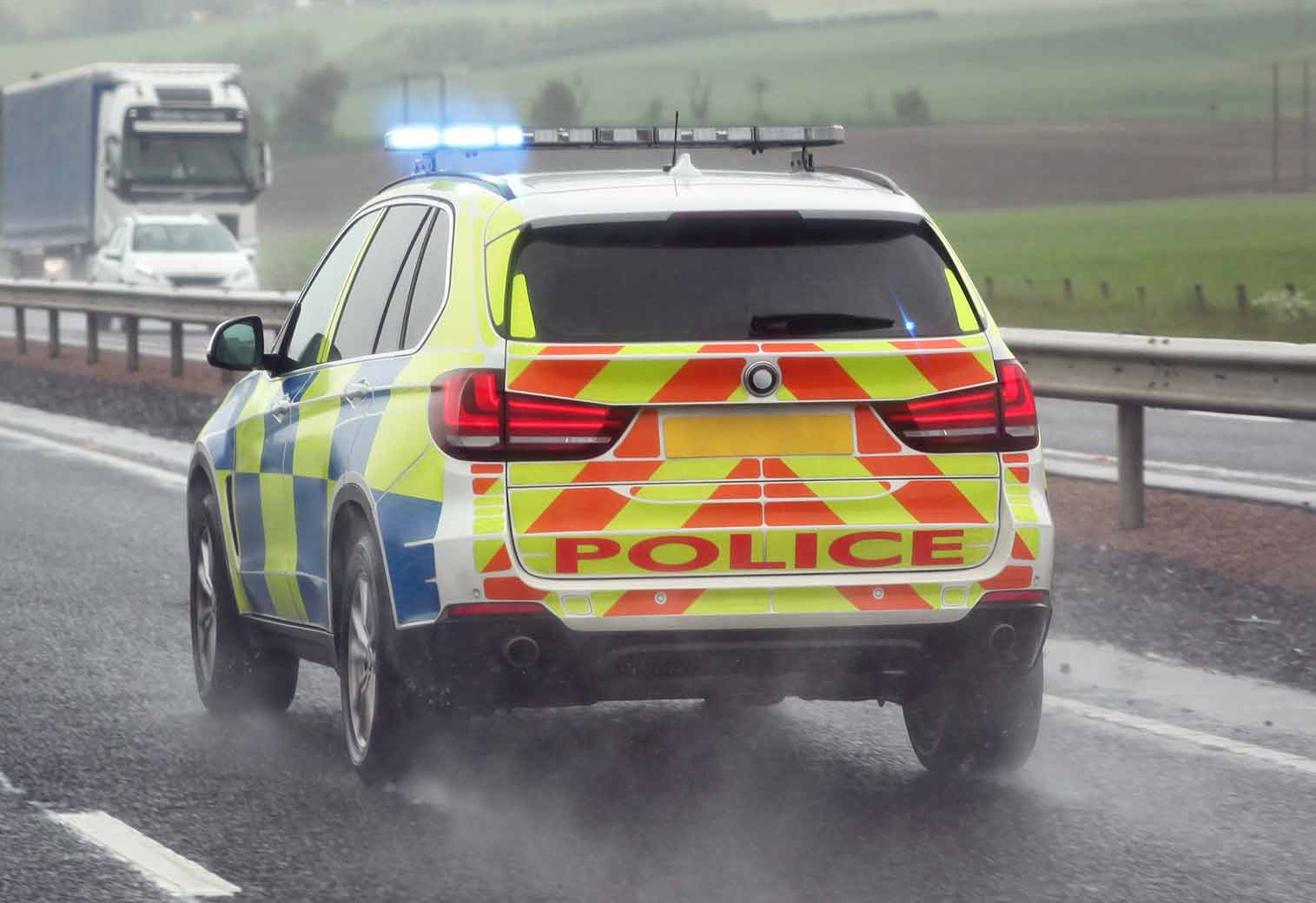
Challenging the Evidence — Mobile phone prosecutions typically rely on police officer observation. The reliability of the officer’s account — sightlines, distance, weather conditions, and duration of observation — can all be tested in court. Call records and device usage data can also be obtained and analysed. Charles Ferguson examines all available evidence to identify the strongest lines of challenge and build the most effective possible defence.
Frequently Asked Questions
Answers to our most common questions.
What is the drink-driving limit in Scotland?
The limit in Scotland is lower than in England and Wales: 22 micrograms of alcohol per 100ml of breath (compared to 35mcg elsewhere in the UK). This often means a single drink can put you over the limit.
Can I get a Speed Awareness Course in Scotland?
No. Unlike England, Scotland does not offer Speed Awareness Courses. If you are caught speeding, you will usually face a fine and penalty points or a court summons for higher speeds.
What is an 'Exceptional Hardship' argument?
If you reach 12 penalty points, you face a mandatory 6-month ban (totting up). We can argue "Exceptional Hardship" to keep your licence if a ban would cause extreme suffering to others (e.g., family or employees).
Can I avoid a ban for drink-driving?
Drink-driving carries a mandatory minimum 12-month ban. However, in very rare cases, we can argue "Special Reasons" (e.g., spiked drinks or a very short distance driven) to move the court to refrain from banning you.
How do the points work for "New Drivers"?
If you are within the first two years of passing your test, your licence will be revoked by the DVLA if you accrue 6 or more points. You would then have to resit both your theory and practical tests.
What are the penalties for "Dangerous Driving" in Scotland?
Dangerous driving is a serious offence carrying a mandatory minimum 12-month ban and a requirement to sit an extended driving test. In the most serious cases, it can result in a prison sentence.